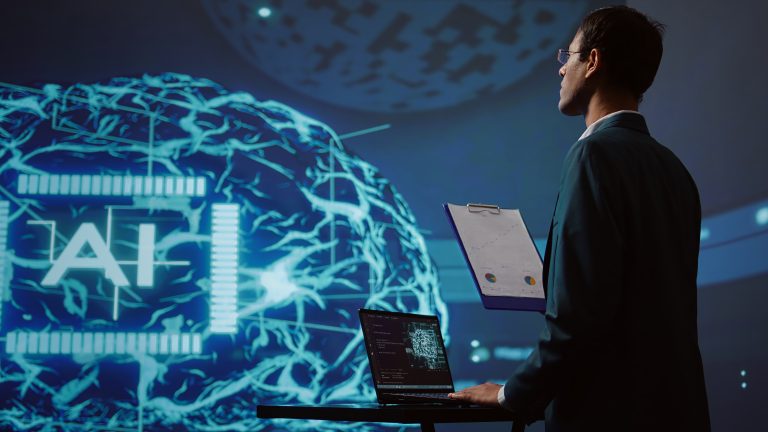
The landscape of education has shifted dramatically over the last few years. If you stepped into a college library back in 2020, you would see students buried under physical stacks of books or toggling through dozens of browser tabs. Fast forward to 2026, and the scene looks entirely different. Artificial Intelligence has moved from being a “cool new gadget” to a fundamental part of how students learn, research, and communicate their ideas.
It isn’t just about having a computer write a paragraph for you. It’s about a deeper, more integrated partnership between human intelligence and machine efficiency. From the way we gather data to how we refine our final drafts, AI is reshaping the academic world in ways that make learning more accessible and personalized than ever before.
The Evolution of Research: From Search Engines to Answer Engines
In the past, research was a manual hunt. You typed keywords into a search bar, clicked through links, and hoped the third or fourth website had the data you needed. In 2026, we have moved into the era of “Answer Engines.”
Modern AI research assistants don’t just give you a list of links; they read the sources for you. They can scan thousands of academic journals in seconds, pulling out the most relevant statistics and findings. This doesn’t mean students are skipping the reading. Instead, they are starting their projects with a curated “knowledge map.” This allows them to focus on high-level analysis rather than getting lost in the weeds of basic data collection. For those struggling with technical subjects, getting machine learning help through these smart systems has become a standard way to bridge the gap between complex theory and practical application.
Personalized Writing Mentors in Your Browser
Writing has always been a lonely process, often filled with “writer’s block” and late-night frustration. Today, AI acts as a 24/7 writing mentor. Unlike the basic spell-checkers of the past, today’s tools understand context, tone, and logic.
If a student’s argument is weak or a transition is jarring, the AI flags it and suggests a more persuasive way to phrase the thought. This instant feedback loop is revolutionary. It teaches students how to write better in real-time. Instead of waiting two weeks for a professor’s red ink on a paper, students are learning from their mistakes as they make them. This level of professional academic assistance ensures that the final submission isn’t just a collection of facts, but a well-structured, logical piece of work.
Bridging the Accessibility Gap
One of the most heartening changes in 2026 is how AI has leveled the playing field for different types of learners.
- For Non-Native Speakers: AI tools now provide sophisticated “translation-in-context,” helping students express complex ideas in English without losing the nuance of their original thoughts.
- For Neurodivergent Students: Those with dyslexia or ADHD use AI to summarize long lectures or organize scattered notes into clean, actionable outlines.
- For Visual Learners: AI can instantly turn a dry textbook chapter into an interactive diagram or a short explanatory video.
Education is no longer a one-size-fits-all model. It is becoming a custom-tailored experience where the technology adapts to the student’s unique brain.
The Ethics of Collaboration: Human vs. Machine
With all this power comes a big question: is it still the student’s work? In 2026, the definition of “original work” has evolved. Schools are moving away from banning AI and toward teaching “AI Literacy.”
The focus has shifted from the output to the input. Professors now look at how a student prompted the AI, how they verified the sources, and how they critiqued the AI’s suggestions. It’s about “Human-in-the-loop” writing. The AI provides the bricks and mortar, but the student must be the architect. Authentic learning happens in the “productive struggle”—the moments where a student disagrees with the AI and decides to take the writing in a more personal, creative direction.
Predictive Learning and Future Success
We are also seeing the rise of predictive analytics in assignments. AI can now look at a student’s past performance and predict where they might struggle in a future project. If a student consistently has trouble with statistical analysis, the system might proactively offer extra tutorials before the assignment is even due.
This proactive approach reduces the stress of “falling behind.” It transforms the academic experience from a high-stakes testing environment into a continuous journey of growth. By 2026, the goal isn’t just to get the grade—it’s to master the skill, and AI is the ultimate tool for that mastery.
Conclusion
The revolution isn’t coming; it’s already here. AI has fundamentally changed the “how” of academic writing and research, but the “why” remains the same. We write to express ideas, to solve problems, and to prove we understand the world around us.
As we look toward the rest of 2026 and beyond, the most successful students will be those who view AI as a partner rather than a shortcut. By combining human creativity and critical thinking with the sheer processing power of artificial intelligence, the next generation is set to reach heights of academic achievement we once thought were impossible.
Keep an eye for more latest news & updates on Teckjb!
About the Author